Helped Me to Find Joy Again
Spoiler alert: This past twelvemonth has been challenging for about everyone—to say the to the lowest degree. So if you're having more than difficulty finding positivity and joy, you're not solitary. In fact, a recent survey from the University of Chicago found that happiness among Americans had fallen to a 5-decade low.
The good news? While, yes, a good chunk of happiness is influenced past genetics and whether or non your basic needs are being met (like safety, shelter, and food), there'due south also a lot you can do to get your joy dorsum, even during difficult, difficult times, says Sonja Lyubomirsky, PhD, professor of psychology at the University of California, Riverside. "You tin can admittedly improve your happiness level—as long equally you're willing to put the endeavour into information technology," she says. "If you constantly remind yourself to practice piffling things, like look at the brilliant side of life, eventually those habits will become engrained."
Even meliorate: By adding more joy to your daily routine, you may likewise raise your overall well-being. "Happiness has two components," Lyubomirsky says. "The beginning is life satisfaction, which is that sense that your life is going well. The second is the experience of frequent positive emotions, which include pride, curiosity, enthusiasm, tranquility, and joy."
Hither are the best expert-approved strategies for how to observe more than joy—in your work and your job, in your home, in your ordinary life, and, yes, fifty-fifty during the pandemic—starting today.
Strike up a conversation with friends, family members, even strangers.
Just in instance yous needed another excuse to invite your girlfriends over for wine and cheese (even if it's via a virtual happy hr) experts agree that we tend to be happier when we connect with other people. "Social interaction is the thing that nearly reliably increases people's positive emotions, whether you're introverted or extroverted" says Elizabeth Dunn, PhD, professor of psychology at the University of British Columbia.
In fact, 1 Harvard report, which followed the same group of men for more than 80 years, institute that having strong personal connections with other people was almost directly correlated to overall happiness, amend wellness, and more contentment. That's specially true if you surround yourself with happy people: Researchers behind a longitudinal analysis published in the BMJ plant that a person is 15% more likely to exist happy if a friend is happy—and that a person's happiness can also influence—and exist influenced past—their friends' friends and even friends' friends' friends. (Demand some help expanding your social circle? Here'due south some great communication for how to make new friends as an developed.)
While close friends might be the near obvious source of social connections, even seemingly footling encounters with the random guy at your domestic dog park or the cashier at your grocery shop tin boost your mood. In a 2022 study published in Social Psychological and Personality Science, Dunn and her colleague asked participants to pick up a drink from a local java shop—half would make it and exit, and half would make friendly small talk with the barista. The researchers establish that the people who were randomly assigned to take a real social interaction felt nigh 17% happier and more socially continued.
Make a joy list.
What brings y'all joy? The question seems simple plenty, but when was the last time you really considered it? Thinking virtually what really makes you happy—spending time with friends, aspects of your piece of work, or perhaps something else entirely—tin aid you lot make time for what truly matters. "Information technology's oftentimes easiest to think well-nigh what might bring us joy when we remember times we've been joyful before," says Laurie Santos, PhD, professor of psychology at Yale University. "Who were we with? What were nosotros doing? How can we recreate those moments to feel joy again?"
You tin can even fix a digital picture frame loaded with photos from those joyful moments, suggests Michelle Gielan, author of Broadcasting Happiness: The Science of Igniting and Sustaining Positive Change. "A slideshow similar that is a visual reminder of all the happiness we accept experienced, and it cements those positive memories," she says. "
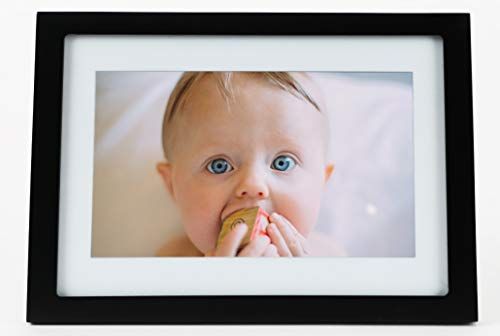
Skylight Frame 10-inch Digital Film Frame
Demand some inspiration? Consider Oprah'south list of what brings her joy. "Service, I gotta say, is my biggest reward and brings me enormous happiness," she said in the July 2022 issue of O, the Oprah Magazine. "My own backyard, glowing in setting sunlight or fogged with mist from the Pacific. Every time I look at my chiliad, I become a thrill of delight. Aforementioned goes for succulent food from my garden, rolling in the grass with my dogs, sitting on the porch with friends, enjoying an evening cocktail, sharing a meal, talking books with people who appreciate skilful stories, LOLing (IRL!), taking a morning hike, luxuriating in a steamy bath with oils and candles, watching my South African daughter-girls grow into confident women, teaching what I've learned, and knowing I am loved."
Give a little fleck.
In that location's a reason why the old aphorism "information technology's amend to requite than to receive" has stood the test of time. It'south actually truthful, especially in regards to cultivating joy. When Dunn and her colleagues analyzed surveys from 200,000 adults globally, they found that in every major region of the world, people who gave money to charity were happier than those who did not—even later on taking their own financial situations into business relationship. That may be in part considering giving to clemency activates regions of the encephalon associated with pleasure, social connectedness, and trust, according to a 2006 study by the National Institutes of Health.
If yous're on a tight budget, giving away but a little bit of money has the same effect on happiness equally giving abroad a lot. In one study, Dunn and her colleagues handed envelopes of coin to students at the Academy of British Columbia. The recipients were told they should spend the money—either $v or $20—past the cease of that solar day either on themselves or on others. "We found that people who spent the money on themselves that day weren't happier that evening." Dunn's colleague, Michael Norton, told The Harvard Gazette. "Only people who spent information technology on others were. The corporeality of money, $5 or $20, didn't matter at all."
So, what is important? Where you lot give your coin. "We've found that the benefits of giving spike when you actually have a window into the impact you're making and when you lot feel a sense of connexion to the people and the cause that you're helping," says Dunn. And if you're not interested (or tin't) requite financially, you lot can reap the same benefits by doing something nice for a person in demand—fifty-fifty if that's just a phone phone call to check in.
Be fifty-fifty kinder.
Altruistic to meaningful organizations and causes isn't the just exercise-proficient gesture that can increase your levels of joy. In a study published in the Review of General Psychology, Lyubomirsky and her colleagues asked higher students to perform v acts of kindness per week over the class of half-dozen weeks. Some students were assigned to complete all v acts in one twenty-four hours, while others were asked to practice all five acts spread over the week. "Nosotros found that when people carried out three to five acts of kindness a twenty-four hours, they experienced significant increases in happiness," says Lyubomirsky. "And it didn't take to be a big gesture. It could be most anything, from giving a friend a ride to letting someone at the grocery shop arrive line ahead of you."
In addition to the frequency with which you do kind acts, inquiry has also indicated that varying the act itself is of import. A 2005 study found that people who completed a variety of acts of kindness showed greater increases in happiness than those who performed the same action over and over again. To assist y'all get started, here are a few suggestions: surprise a neighbor with freshly-baked treats, compliment the first person you lot speak to each 24-hour interval, get out a thanks annotation for your mail carrier, run an errand for an extremely busy friend or family fellow member, hold the elevator door when you see someone running towards it, pass forth a great book y'all've but finished reading, and go out a generous tip for a pleasant waiter.
This content is imported from poll. You may be able to find the same content in another format, or you may exist able to find more information, at their web site.
Add some color to your home—and earth.
Tin can the colors, effects, and decorations in our domicile brand us feel quantifiably happier? According to Ingrid Fetell Lee, a designer and author of Joyful, the answer is a resounding yes. More than a decade ago, Fetell Lee started asking complete strangers about the tangible things that brought them joy. To her surprise, some answers came up over and once again, including confetti, rainbows, treehouses, hot air balloons, googly eyes, kites, and clouds. "It was immediately articulate that there was something about bright colors," Fetell Lee says. "It seemed like they translated to joy."
Scientific research agrees: A written report of nearly 1,000 people across four countries found that those working in vibrant, colorful offices were not simply more alert than those working in duller space, but they were also more joyful and friendly; another written report establish that bright colors—like pink and blue—are associated with positive emotions, while dark colors—like brownish and blackness—are associated with negative emotions. That's why Fetell Lee believes adding pops of color is ane of the almost constructive means to spark joy at home.
Not ready for a purple blue sleeping accommodation or a yellow kitchen? Fetell Lee has three bright ideas: Paint your front door with an eye-catching color, like coral—which is what Fetell Lee chose for her own house. "It's the last thing yous encounter when yous leave, it'due south the first thing you see when you get home, and it brings joy to the residue of the neighborhood," she says. If you're looking for an even more foolproof manner to play with color, endeavor replacing any white candles in your home with ones that come up in happy hues, like yellowish or turquoise. You lot can also paint the dorsum of your closets or cabinets with vivid colors or fun patterns. "It'due south an easy way to add picayune elements of surprise to your habitation," says Fetell Lee, who busy her closet with vivid yellow cabana stripes. "I can't tell you lot how many times I've been surprised by those stripes—fifty-fifty though I'm the one that painted them!"
Make time for do—fifty-fifty if information technology's but 10 minutes.
Research shows that being at the acme of your game physically, can also lead to being at the top of your game mentally. In 2018, a study published in the Journal of Happiness Studies found that people who worked out for equally little as x minutes per week tended to be more cheerful than those who never exercise.
Fifty-fifty though the link between exercise and happiness does not appear to be activity specific, it's still important to discover the blazon of workout that works best for yous, says Dunn. According to her research, people tend to underestimate the mood-boosting benefits of fitness because they focus disproportionately on the first bit of exercise, which can exist generally aversive (call up: when you start running and your muscles are still warming upwards). "Anything you tin can practice to make the feel more enjoyable can help recalibrate your expectations—and help you more hands recognize the benefits of exercise," she says.
Desire to really footstep up your game? You might likewise consider activities that are done with other people, like taking a spinning course—after the pandemic, of course—or going on a run with a friend, Lyubomirsky suggests. "Non only practise you get the benefits of exercising, but yous also get the benefits of socializing," she says. "That can result in an extra boost."
This content is imported from poll. Yous may be able to find the aforementioned content in another format, or you may be able to find more information, at their web site.
Savor blithesome moments, both large and small.
Nosotros oft let ordinary joyful moments—like drinking your morning cup of coffee, inhaling the rich odor of a fresh candle, listening to birds singing outside your window—pass without acknowledging how pleasurable they really are. Merely savoring, which is the try to fully feel and enjoy our positive experiences, is proven to increase happiness, according to Lyubomirsky. "It takes practise to really savor those moments—to not be distracted just be mindfully present for them, especially noticing how it feels in your body." says James Baraz, founding teacher of Spirit Rock Meditation Center and co-writer of Awakening Joy: 10 Steps to Happiness. "It'due south one matter to know, I'k feeling good correct now. But it's a whole other experience to know, This is what it feels like to experience good."
That non simply creates positive feelings, but it likewise helps dilate them and makes them last longer. In ane study published in The Periodical of Positive Psychology, participants kept diaries for a month, recording the positive activities they participated in and how much they did or didn't savor them. Those who reported high levels of savoring besides maintained high levels of happiness no thing what the rest of the day brought, while those who reported low levels of savoring needed numerous positive events to be in a good mood.
Get houseplants.
Y'all've probably noticed that plants are having a moment. Gyre through Instagram, and, chances are, you lot'll come beyond pictures of rooms covered in leafy vines and tiny-but-mighty succulents. Only the benefits of owning indoor plants get beyond interior decorating (though, yes, they are an piece of cake, budget-friendly mode to jazz up any room): One study published in the Journal of Physiological Anthropology found that touching and smelling indoor plants can reduce physiological and psychological stress, while another study published before this year establish that even the mere sight of an indoor establish can reduce stress. Non to mention that they can also lower blood pressure, increase focus and concentration, and amend air quality, says Fetell Lee
Don't exactly have a green thumb? Hither are some of the most sturdy succulents, as well as some other plant varieties that are (nearly) impossible to kill. You can could too attempt The Sill's Plants for Beginners subscription service. Each calendar month, the online store will send you a low maintenance institute, a clay planter, and instructions for how to intendance for your new greenery.
Or, better withal...go exterior.
A healthy dose of the bully outdoors could make y'all healthier and happier. "Spending time in nature quiets the function of the brain that tends to breed and ruminate over any issues or worries," says Fetell Lee. In addition to boosting mental wellness, a large body of inquiry indicates that exploring your local park or walking through the woods can reduce stress, decrease claret pressure, lower the risk of heart disease and diabetes, as well as increase inventiveness, noesis, and life expectancy.
Plus, you don't need to embark on a half-twenty-four hours hike for nature to work its magic on you. A 2022 study found that spending 120 minutes a week—or just over 17 minutes per day—strolling along a tree-lined creek or sitting by a lake greatly enhanced a person'due south overall sense of well-existence, while inquiry published in the Periodical of Positive Psychology institute that spending just 5 minutes walking in nature will increase happiness. The bottom line? Any time spent outside is a step in the right direction. (If you're unable to get exterior, endeavour looking at photos of natural environments, like images of a lush forest, which can produce similar effects, co-ordinate to a 2022 report.)
Be grateful.
Gratitude isn't but a concept we should visit over turkey, stuffing, and pumpkin pie. It's a practice that's been scientifically shown to increase your happiness. In a 2003 study published in the Journal of Personality and Social Psychology, participants were asked to write a few sentences each week—1 group wrote near the things they were grateful for, another group wrote about the things that had displeased them, and a third wrote virtually the events that had affected them with no emphasis on them being positive or negative. After 10 weeks, researchers found that those who kept gratitude journals were happier and more optimistic. "Since joy is continued to appreciating particular things, counting your blessings is an easy way to observe the good things in your life in a way that can bring joy," says Santos, who asks her students to go along a gratitude journal.
Set to thank? Earlier bed, spend five to ten minutes writing down five things for which you are grateful—from having a task that constantly challenges you to coming home to a freshly-made bed—in a note on your phone, a daily calendar, or a special notebook. If you benefit from strength in numbers, accept five minutes each night to share something you appreciated that twenty-four hour period over a group e-mail with friends or dinner with your family. "Gratitude with others multiplies the positive effect," says Gielan. "Getting to know others past the small, meaningful, wonderful parts of their lives deepens relationships and sparks daily joy."
Skip negative news outset thing in the morning.
It doesn't take a scientist to know that seeing or hearing negative news broadcasts can take an immediate effect on your stress level. But but how powerful is information technology? In a study conducted by Gielan, Arianna Huffington, and researchers at the Institute for Applied Positive Research, participants were asked to scout either three minutes of negative news before ten a.k. or three minutes of positive, solutions-focused news. "When you're exposed to but three minutes of negative news outset matter in the morning time, y'all have a 27 per centum higher likelihood of reporting that you had a bad solar day six to eight hours later," Gielan told The Washington Postal service. "We expected people would report being unhappier for the adjacent few minutes after watching negative news. But we didn't expect it to accept such a lasting consequence six to eight hours later."
Here are a couple ways you lot can cut downward on the negative noise: To avoid waking upwardly to a flurry of breaking news alerts, shut off button notifications to your telephone or e-mail; instead of making breakfast while listening to talk radio or watching network news, tune into one of these motivational podcasts; and during during your commute to work, scroll through Instagram accounts dedicated to positive news (we recommend @tanksgoodnews and @goodnews_movement), rather than the day's headlines.
If you have the means, invest in time-saving services.
Money can't purchase happiness, correct? Well, co-ordinate to some research, that depends on how you lot spend it. A study published in the Proceedings of the National Academy of Sciences found that when people spent money on time-saving services—paying for grocery delivery, hiring a housecleaner, using a backyard care visitor—they experienced a boost in happiness and overall life satisfaction. "Although buying time tin can serve as a buffer confronting the time pressures of daily life, few people are doing it even when they can afford it," Dunn said in a press release. "Lots of research has shown that people benefit from buying their way into pleasant experiences, only our research suggests people should also consider buying their way out of unpleasant experiences."
And then, spend those actress few minutes immigration your mind.
If you're not sure how to make the nigh of your newfound free time, consider meditation, which has been shown to increase positive emotion, decrease stress and feet, improve your immune function, and enhance feelings of pity. "We worry that being happy is selfish," says Emma Seppälä, PhD, science director of the Stanford Center For Compassion and Altruism Research and Teaching. "Merely taking intendance of yourself non only boosts your own happiness, but it also results in more than success in your career and relationships." For help starting your meditation practice, check out these tips from Blackness Girl in Om's Lauren Ash, likewise as our listing of the best meditation apps out at that place right now.

This content is imported from OpenWeb. Y'all may be able to find the aforementioned content in another format, or you lot may be able to discover more than information, at their web site.
Source: https://www.oprahdaily.com/life/health/a32957825/how-to-find-joy/
0 Response to "Helped Me to Find Joy Again"
Postar um comentário